Antique Persian Silk Heriz Rug
Click image to enlarge it


Size:
4'1" x 5'8" - 124cm x 173cm
Origin:
Period:
C 1880
Materials:
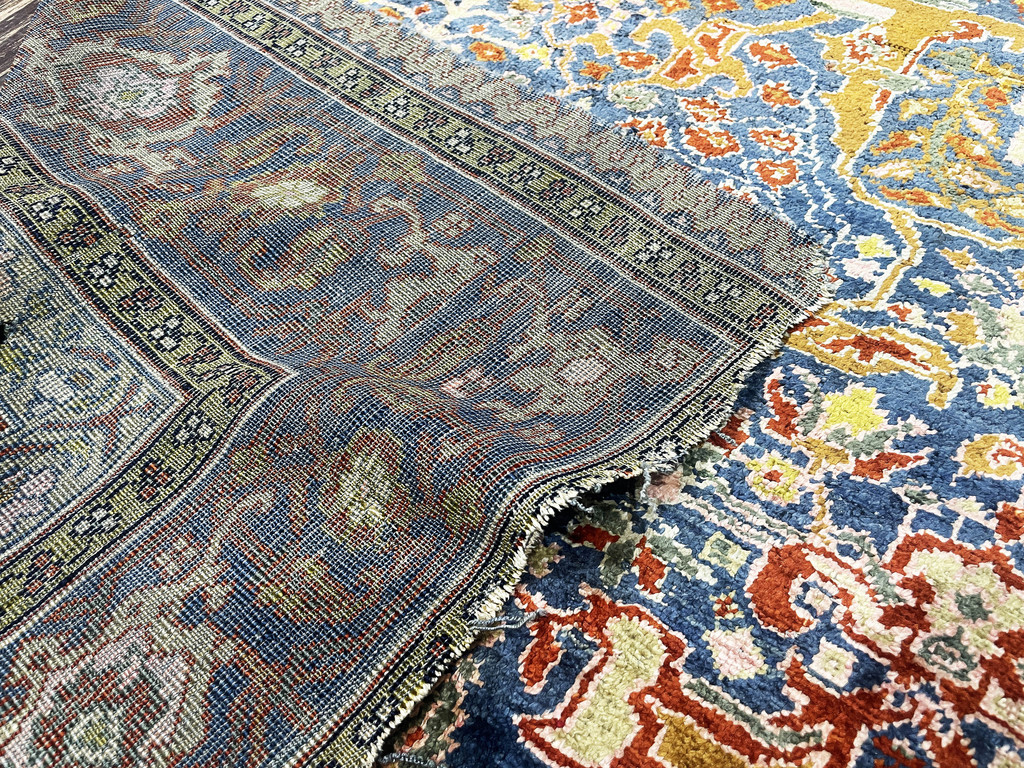
Wool & silk pile, silk warp & weft
Condtion:
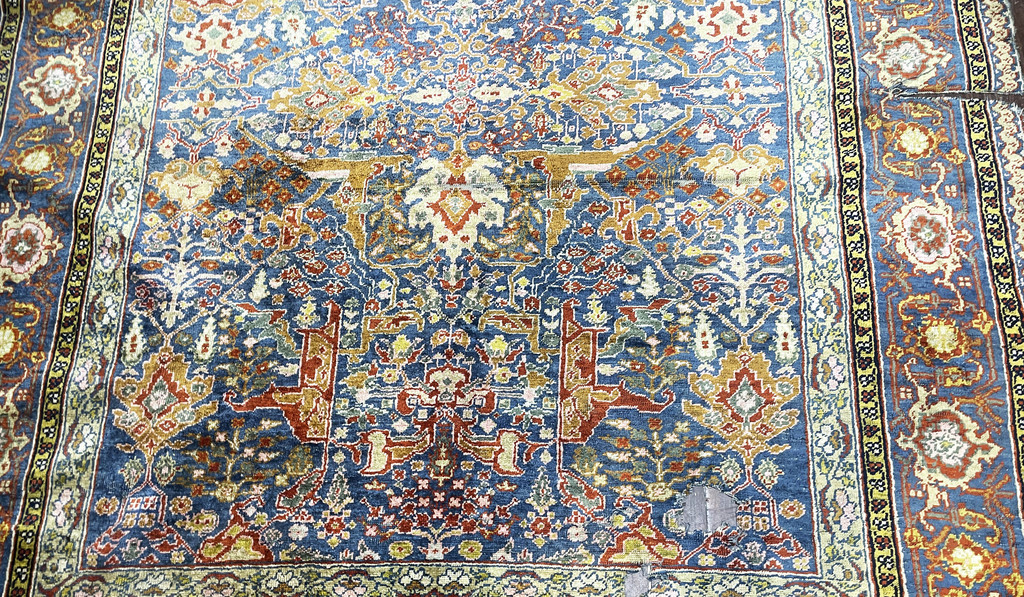
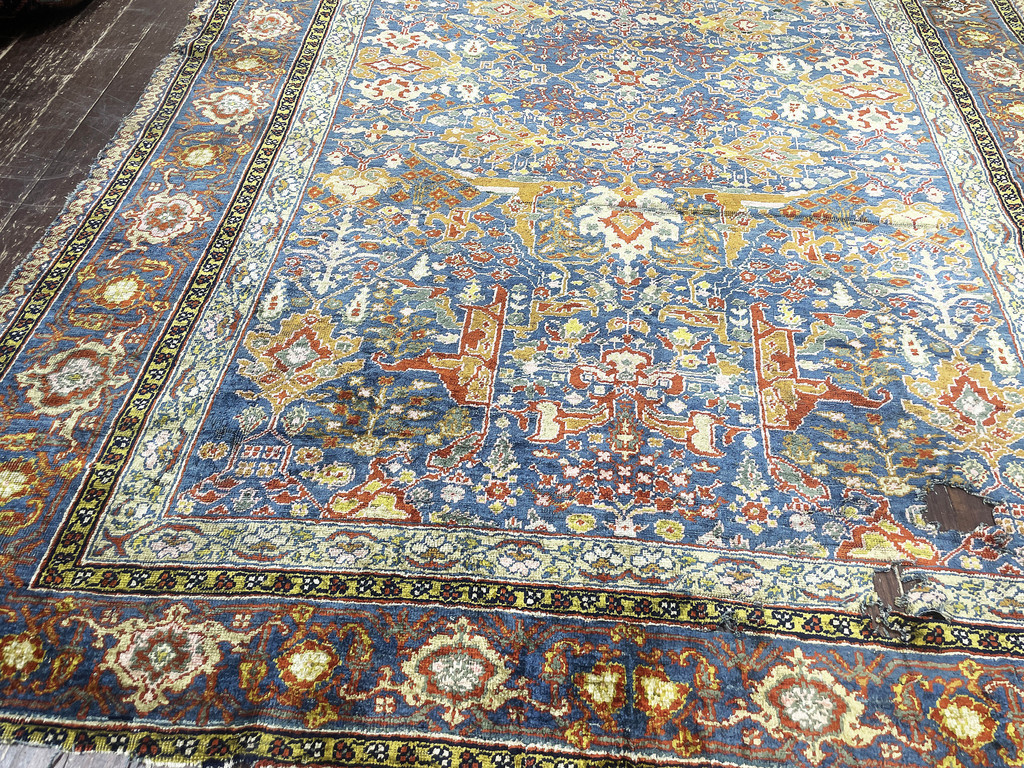
Structurally sound with good pile, but several holes, missing areas, and edge damage. The silk foundation remains stable and the rug is not dry or rotten.
Price:
$4,000.
Item#:
0060
Notes:
Construction: Hand-knotted silk pile on a silk foundation
Condition: Structurally sound with good pile, but several holes, missing areas, and edge damage. The silk foundation remains stable and the rug is not dry or rotten.
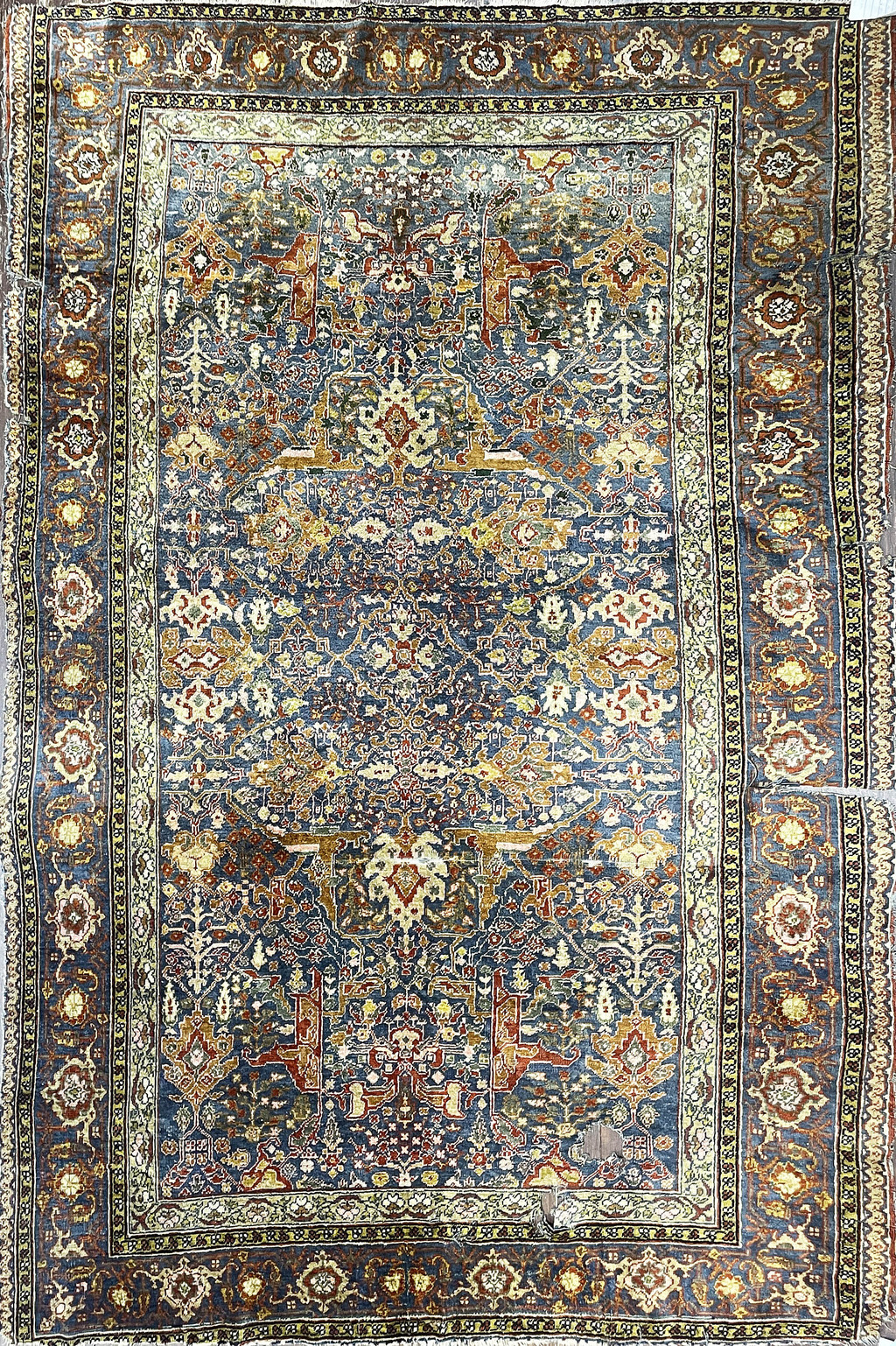
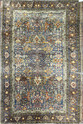
This rare antique Persian Silk Heriz rug is an exceptional survivor from the late 19th century, representing one of the most unusual and collectible variations of Heriz weaving. While Heriz rugs are traditionally woven in wool, silk examples from this period are exceedingly scarce and were likely produced as special commissions for affluent patrons. Their rarity alone makes them highly desirable among collectors of antique Persian textiles. Fine silk Heriz rugs from the late 19th century have achieved strong auction results when preserved in good condition.
The rug features an impressive Herati-inspired composition centered by a richly detailed navy-blue medallion floating on an ivory field filled with finely drawn flowering vines, palmettes, and stylized botanical motifs. Brick-red corner spandrels provide dramatic contrast, while the deep indigo main border is richly decorated with alternating rosettes, palmettes, and elegant vinery. The harmonious palette of indigo blue, ivory, terracotta red, celadon green, saffron gold, and soft sky blue has mellowed beautifully over time, giving the rug remarkable warmth and character.
Despite its extensive condition issues—including several holes, losses, and damaged areas—the remaining silk pile is surprisingly well preserved and retains excellent color and clarity. Importantly, the rug is not rotten, and the surviving weave demonstrates the extraordinary fineness and craftsmanship of the original weaving. Because the damage is primarily structural rather than the result of foundation deterioration, the rug remains a worthwhile candidate for professional conservation by an experienced textile restorer.
For a collector or specialist dealer, the rarity of an authentic silk Heriz from this period is often more important than perfect condition. If the restoration is executed sympathetically and preserves the originality of the rug, it could become a highly desirable collector's piece. Antique rug values depend heavily on rarity, age, quality, and condition, with significant structural damage reducing value while exceptional rarity can preserve collector interest.