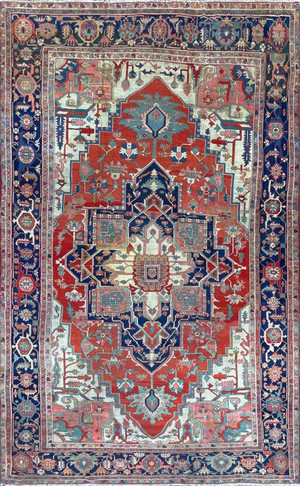
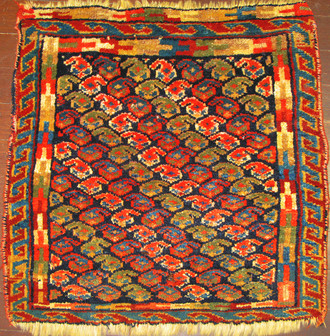
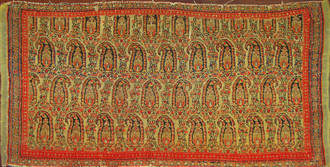
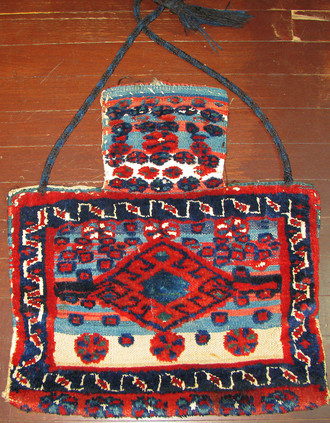
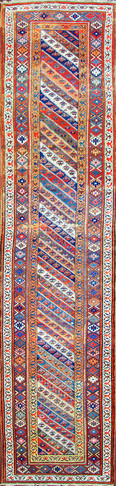
This magnificent antique Persian Serapi carpet is an outstanding example of the grand room-size carpets woven in the Heriz region during the late 19th century. Dating to approximately 1880, it embodies the qualities that have made Serapi carpets among the most admired and collectible of all Persian rugs.
Tabriz carpets are distinguished by their excellent weave and by their remarkable adherence to the classical traditions of Persian rug design. The city of Tabriz, was the earliest capital of the Safavid dynasty.
One of the most important figures in Tabriz rug making was the master weaver Haji Jalili and best known today for his incredible and unique approach to rug-making and his preference for distinctive color palettes and design elements. Haji Jalili is especially known for mixing lighter colors -- such as pinks, golds and grays -- into the design of his rugs.
The results of the archeological digging in Azerbaijan validate the antiquity of the carpet weaving traditions on this land. This Iranian province used to embrace not only a large portion of north-western Iran, but also part of the southern Caucasus.