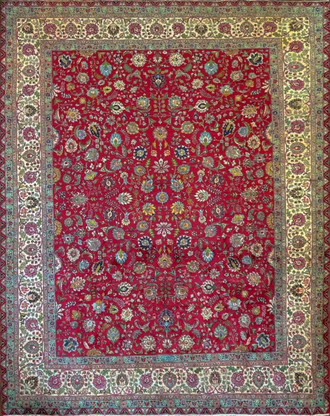
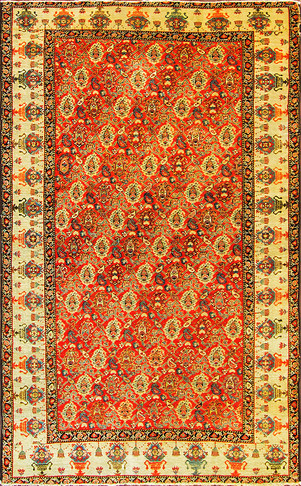
Antique/vintage Persian Handmade Tabriz Carpet, 11'6" x 14'5" c-1940's, highly decorative with unusual red and ivory background color, with allover floral design in excellent condition and good quality, professionally cleaned. .
Tabriz carpets are distinguished by their excellent weave and by their remarkable adherence to the classical traditions of Persian rug design. The city of Tabriz was the earliest capital of the Safavid dynasty.
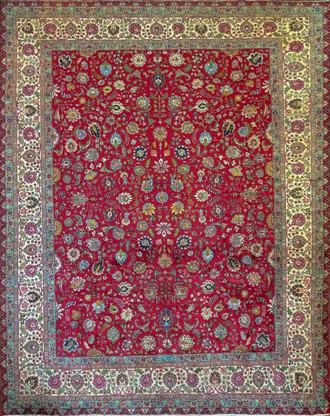
Antique/vintage Persian Handmade Tabriz Carpet, 11'6" x 14'5" c-1940's, highly decorative with unusual red and ivory background color, with allover floral design in excellent condition and good quality, professionally cleaned. .
Tabriz carpets are distinguished by their excellent weave and by their remarkable adherence to the classical traditions of Persian rug design. The city of Tabriz was the earliest capital of the Safavid dynasty.
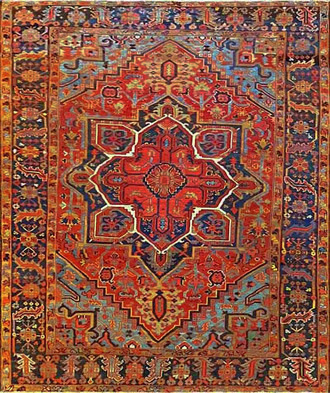
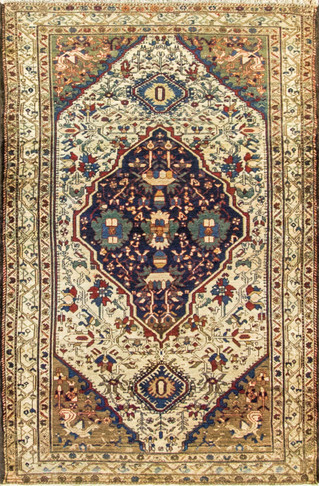
Antique Handmade Persian Serapi/ Heriz Carpet, 8' x 10'3", c-1880's, rusty red background color with geometric allover and large central medallion design in multi colors of green, yellow, white and blue colors, natural wool dye.
This rug is in good condition and has been professionally cleaned.
The design is geometric and popular for today's room furnishing.
A charming antique Persian Serapi/Heriz carpet it has a range of outstanding colors.
A great painting is measure by beauty of its colors and the same statement goes for this rug.
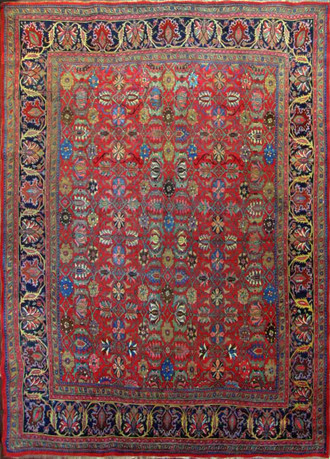
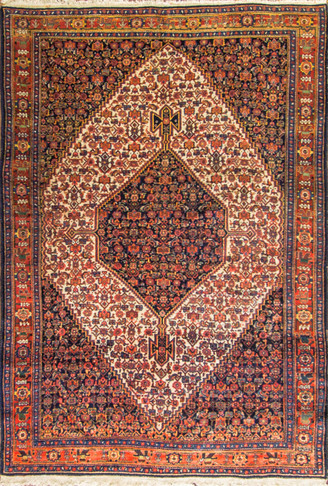
The description you provided details an impressive and collectible antique Persian Bijar Halwai carpet. Here's a summary of the key features and characteristics mentioned:
Size: The carpet measures 9 feet 2 inches in width by 12 feet 10 inches in length, making it a substantial and room-sized piece.
Design: The carpet features an all-over Herati design, a classic and intricate pattern widely used in Persian rugs.