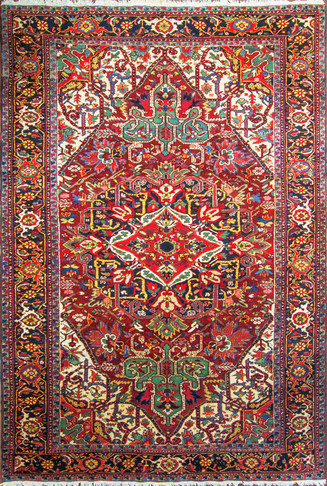
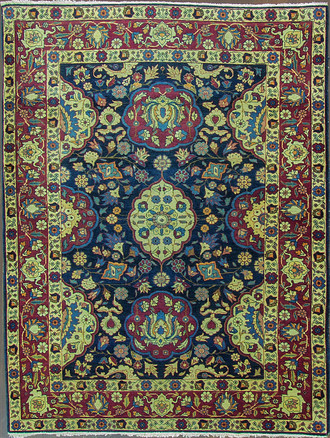
Unusual beautiful and colorful Persian Heriz rug, with vegetable dyes wool and very good quality. Heriz rugs are Persian rugs from the area of Heris, East Azerbaijan in northwest Iran, northeast of Tabriz. Such rugs are produced in the village of the same name in the slopes of Mount Sabalan. Heriz carpets are durable and hard-wearing and they can last for generations. 19th century examples of such carpets are often found on sale by major auction houses in United States and Europe.
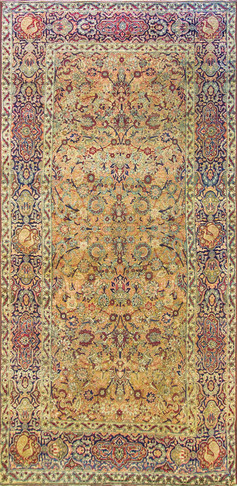
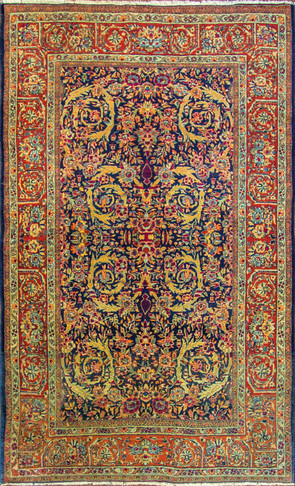
This exceptionally elegant antique Persian Kermanshah carpet embodies the refined decorative aesthetic that made the finest Western Persian weavings so desirable among aristocratic and European-influenced interiors during the late 19th century. The rug displays an unusually sophisticated allover floral design rendered with extraordinary delicacy and balance across an elongated gallery format.
The field is woven in softly muted ivory, sand, pale gold, faded rose, soft celadon, and gentle powder-blue tones, creating a luminous and highly decorative surface with remarkable subtlety.
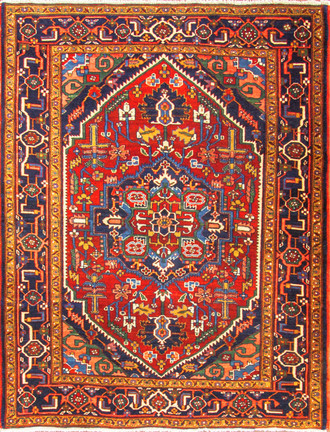
A great painting is measure by beauty of its colors and the same statement goes for this rug. Heriz rugs are Persian rugs from the area of Heris, East Azerbaijan in northwest Iran, northeast of Tabriz. Such rugs are produced in the village of the same name in the slopes of Mount Sabalan. Heriz carpets are durable and hard-wearing and they can last for generations. 19th century examples of such carpets are often found on sale by major auction houses in United States and Europe.
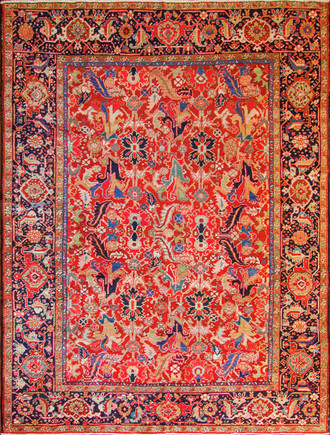
Gorgeous antique Persian Serapi Heriz carpet with all-over design and breathtaking red brick background color. Heriz rugs are Persian rugs from the area of Heris, East Azerbaijan in northwest Iran, northeast of Tabriz. Such rugs are produced in the village of the same name in the slopes of Mount Sabalan. Heriz carpets are durable and hard-wearing and they can last for generations. 19th century examples of such carpets are often found on sale by major auction houses in United States and Europe.
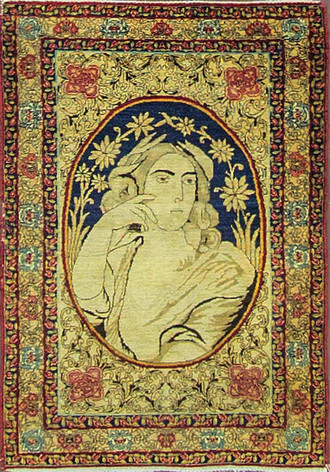
Pictorial rugs are some of the most over-the-top examples of the artistry, talent and determination needed to design and construct a fine, everlasting carpet.
Portraits of dignitaries, important officials and high-ranking people are also found in antique pictorial rugs. With the same token, weavers also choose to illustrate important scenes from history and literature.
Typifying pomp and circumstance, this Kerman carpet features a royal portrait.
A Kashan rug is made in the city of kashan which is in Isfahan Province in North Central Iran. There was production of Persian carpet at Royal workshops in the 17th and early 18th century. The Persian carpet workshops ceased production in circa 1722 after the Afghan invasion.
Persian carpet production was very minor until the 20th century. Historically, Kashan was a major center in the garment trade. In the late 19th century, the market shifted and the local industry went from fine wool cloth to fine wool carpets. High quality wool was sourced from Sabzevar.
The city of Tabriz is situated in North West Persia and it is one of the largest cities and also the capital in the province of Azerbaijan and was the earliest capital of the Safavid dynasty and it can claim to have been a center of carpet production longer than any other city in Iran. The population comprising of the Azaris, who are the largest ethnic minority in Iran and speak the Turkish dialect. The city is old and has for centuries been a very important trading place and border station. A good Tabriz has a short and rough pile.
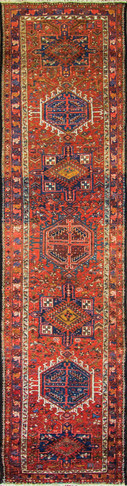
Karajah, Heriz, Serapi, Bakshaish. Karaja and Serapi or Bakshaish all are villages in the district of Heriz north west Persia. Since mid-19th century rugs from these area imported to US and European market. This Karaja rug like many other antique rugs antique rugs that used in US has beautiful appeal of colors, they are soft and mute and great attraction to the viewers