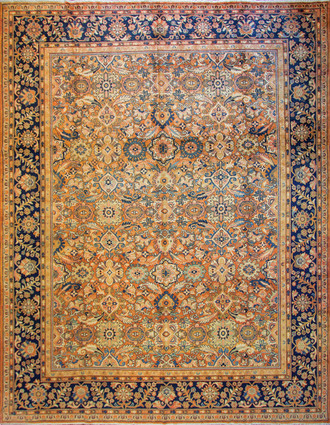
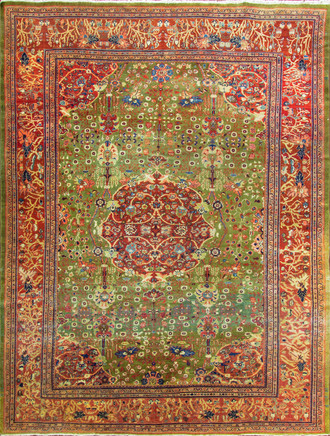
The city of Sultanabad (which is now known as Arak) was founded, in the early 1800s, as a center for commercial rug production in Iran. During the late 19th century, the firm of Hotz and Son and Ziegler and Co. established a manufacturer in Arak / Sultanabad whose sole objective was to produce rugs to meet the western demands.
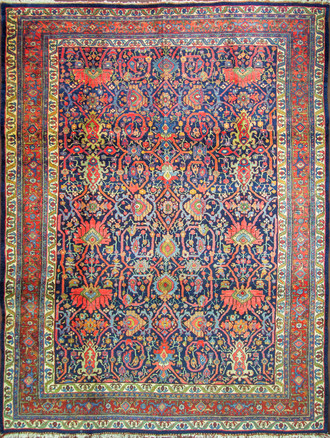
This impressive antique Persian Bijar carpet is an outstanding example of the famous weavings from the Kurdish weaving center of Bijar, often referred to as the "Iron Rugs of Persia" because of their exceptionally dense construction and remarkable durability.
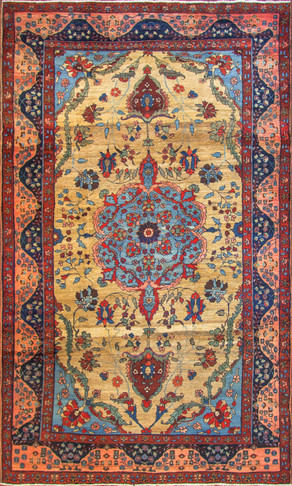
The city of Tabriz is situated in North West Persia and it is one of the largest cities and also the capital in the province of Azerbaijan and was the earliest capital of the Safavid dynasty and it can claim to have been a center of carpet production longer than any other city in Iran. The population comprising of the Azaris, who are the largest ethnic minority in Iran and speak the Turkish dialect. The city is old and has for centuries been a very important trading place and border station. A good Tabriz has a short and rough pile
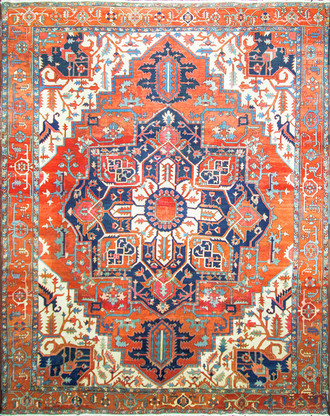
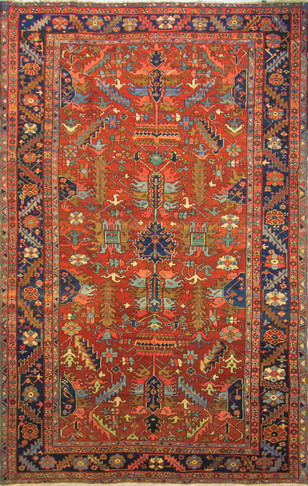
Natural wool dues, the multi colors are amazingly beautiful, mostly like antique Serapi. Charming all over design with geometric motives. Heriz rugs are Persian rugs from the area of Heris, East Azerbaijan in northwest Iran, northeast of Tabriz. Such rugs are produced in the village of the same name in the slopes of Mount Sabalan. Heriz carpets are durable and hard-wearing and they can last for generations.
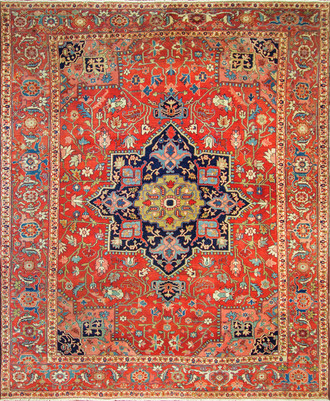
This exceptional late 19th-century Serapi carpet is a superb example of one of the most admired village weaving traditions, celebrated for its bold architectural design, outstanding artistry, and enduring decorative appeal.
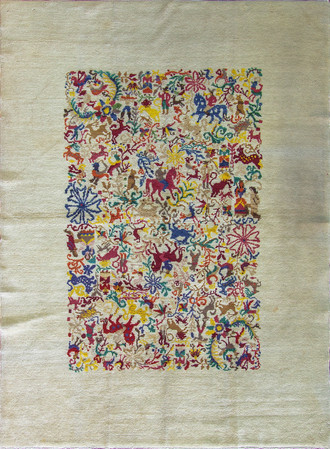
Ecuadorian rugs and textiles have existed in the Andean Region since Pre-Columbian times. Upon the arrival of the Spanish in the 15th century, the rug industry in the region rapidly expanded. Due to this increased demand, the Spanish colonizers began producing large textile workshops in the highlands. This was the beginning of large-scale carpet production in the Andes. Significantly widespread incorporation of traditional folklore and motifs particular to Ecuador into rug production.