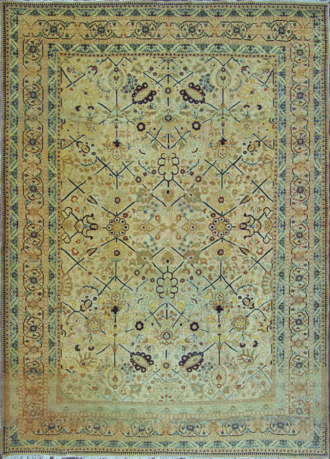
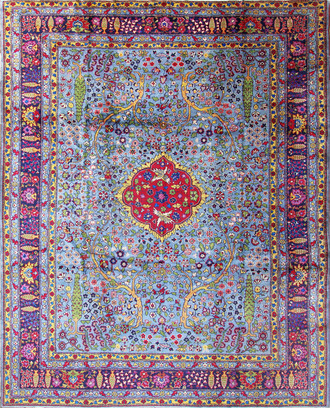
A very fine late 19th-century Persian Tabriz carpet attributed to the celebrated Hajji Jalili tradition, distinguished by its exceptionally delicate drawing, sophisticated floral composition, and beautifully subdued palette.
The open ivory field is particularly attractive and is filled with an elaborate network of flowering vines, palmettes, rosettes, leaves, and graceful arabesques. Rather than relying on a dominant central medallion, the design develops rhythmically across the entire field, giving the carpet an unusually spacious and elegant appearance.
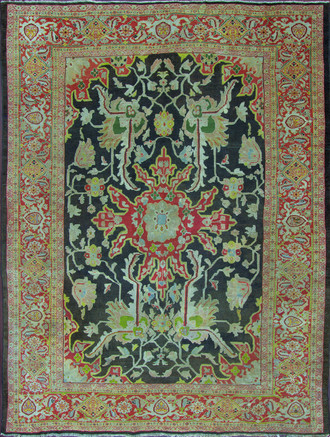
Serapi rug could be also Bakshaish because of his motifs like birds in the center medallion and combination of colors, primitive design and weave. the beautiful design of birds and their egg inside of the nest. decorated with traditional patterns and loosely spaced design. a wonderful combination of tribal patterns from the Caucasus along with early Safavid influences.
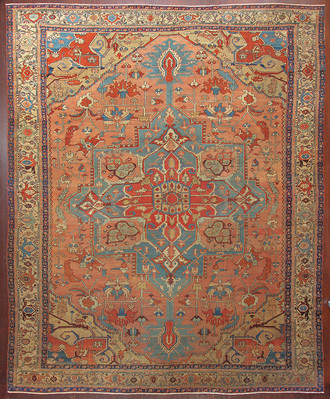
This is a very fine and rear mid nineteen century Persian serapi carpet, it's all fine vegetable dyed wool and the carpet is in excellent shap.
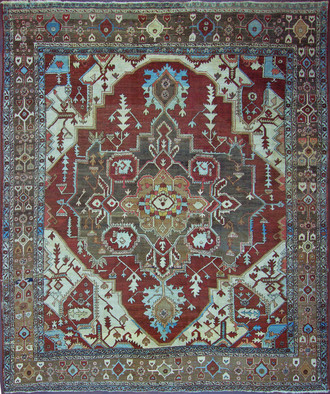
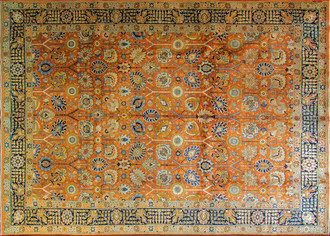
Very unusual geometric design made in northwest Persia. The carpet portrait a central medallionand one fourth of the same medallion is in each corner of the rug.
Bakshaish, Heriz Serapi rugs made in Persia,these rugs adapt the style and feeling of the finest smaller village or tribal rugs to the scale of room-size pieces. The drawing of these rugs and carpets is always bold, geometric, dynamic, and abstract.
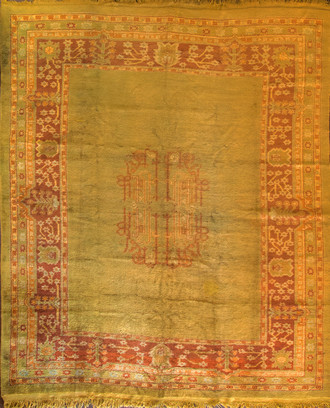
Ushak rugs have been in production since the 15th century with superb wools and natural dyes. Unlike other Turkish rugs, Ushak rugs influenced after Persian rugs and they woven with Ghiordies knots and all double knotted, their design is feature intricate motifs of vines and leaves and typically based on geometric motifs.