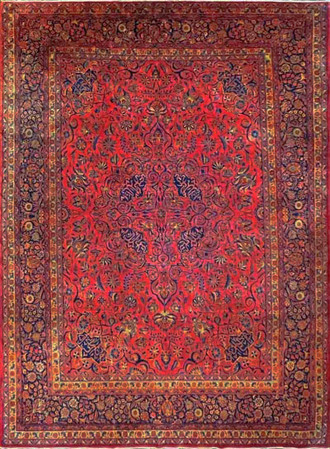
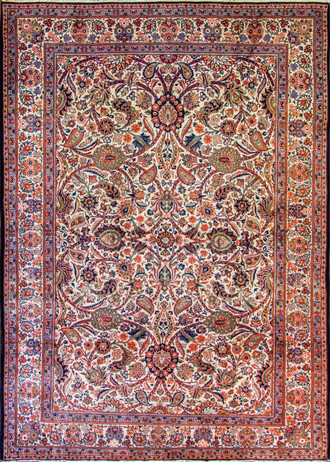
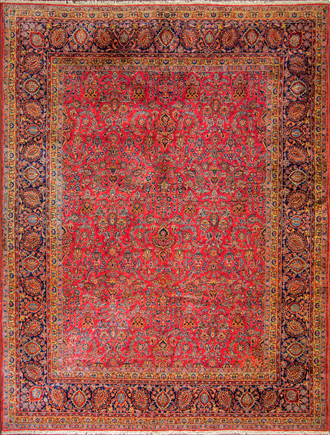
This elegant antique Persian Manchester Kashan is an outstanding example of the finest early 20th-century production from the celebrated weaving center of Kashan. Woven with the famous imported Manchester-spun Merino wool from England, these carpets are admired for their exceptionally soft, lustrous pile and refined workmanship.
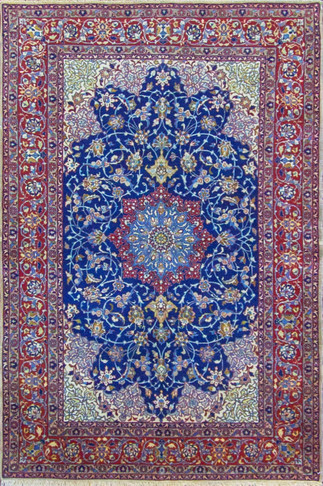
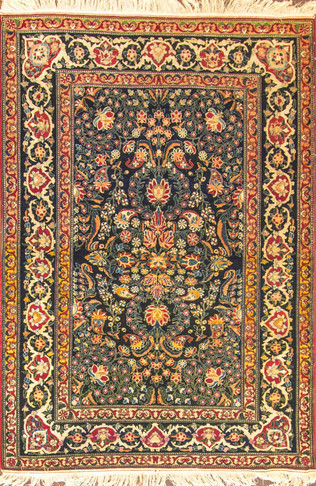
The Iranian city of Isfahan has long been one of the centres for production of the famous Persian carpet, 3'7" x 5'4". Isfahani carpets are known for their high quality. The most famous workshop in Isfahan is Seirafian.
Weaving in Isfahan flourished in the Safavid era. But when the Afghans invaded Iran, ending the Safavid dynasty, the craft also became stagnant.
The high knot density antique carpets in which Isfahan excelled continued to be woven in the late 19th and 20th centuries, maintaining the original inspiration and attention to refinement and detail.
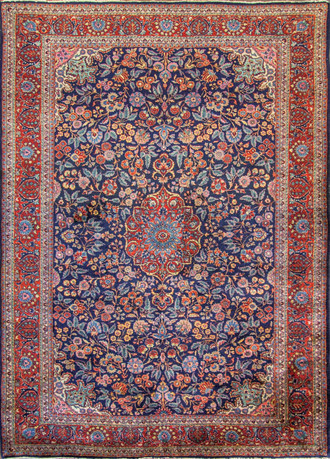
Great condition and quality Persian Kashan carpet, c-1930.
Amazing size and beautiful blue background with all over floral design in multi colors.
A Kashan rug made in Persia in the city of Kashan in Isfahan Province North Central Iran. There was production of Persian carpet at Royal workshops in the 17th and early 18th century. The Persian carpet workshops ceased production in about 1722 after the Afghan invasion. Persian carpet production was very minor until the 20th century. Historically, Kashan was a major centre in the garment trade.
A Kashan rug is made in the city of kashan which is in Isfahan Province in North Central Iran. There was production of Persian carpet at Royal workshops in the 17th and early 18th century. The Persian carpet workshops ceased production in circa 1722 after the Afghan invasion.
Persian carpet production was very minor until the 20th century. Historically, Kashan was a major center in the garment trade. In the late 19th century, the market shifted and the local industry went from fine wool cloth to fine wool carpets. High quality wool was sourced from Sabzevar.
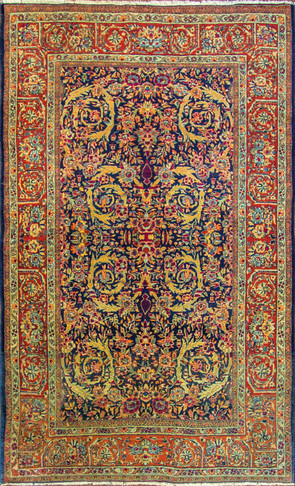
Great condition and quality Persian Kashan carpet, circa 1930.
Amazing size and beautiful blue background with all-over floral design in multi colors.
A Kashan rug made in Persia in the city of Kashan in Isfahan Province North Central Iran. There was production of Persian carpet at Royal workshops in the 17th and early 18th century. The Persian carpet workshops ceased production in about 1722 after the Afghan invasion. Persian carpet production was very minor until the 20th century. Historically, Kashan was a major centre in the garment trade.
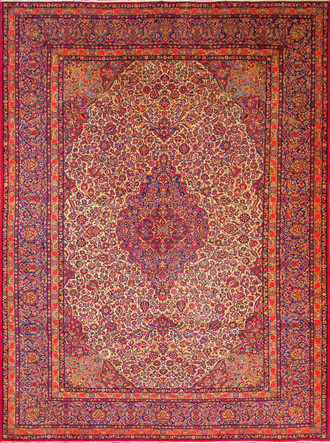
Very fine Persian Dabir Kashan in perfect condition, circa 1920. Unusual purple red background color. High density knotting woven from kork wool, creating an intricate design. From the mid-19th to the early 20th century the finest quality rugs from Kashan were called Dabir and said to be from the workshop of Dabir. Kashan is a city in North Central Iran. We know that there was production of Persian Carpet at Royal workshops in the 17th and early 18th century.
The Iranian city of Isfahan has long been one of the centres for production of the famous Persian carpet. Isfahani carpets are known for their high quality. The most famous workshop in Isfahan is Seirafian. Weaving in Isfahan flourished in the Safavid era. But when the Afghans invaded Iran, ending the Safavid dynasty, the Craft also became stagnant. The high knot density antique carpets in which Isfahan excelled continued to be woven in the late 19th and 20th centuries, maintaining the original inspiration and attention to refinement and detail.
A Kashan rug made in Persia in the city of Kashan in Isfahan Province North Central Iran. There was production of Persian carpet at Royal workshops in the 17th and early 18th century. The Persian carpet workshops ceased production in about 1722 after the Afghan invasion. Persian carpet production was very minor until the 20th century. Historically, Kashan was a major center in the garment trade. In the late 19th century, the market shifted and the local industry went from fine wool cloth to fine wool carpets. High quality wool was sourced from Sabzevar.