A very attractive antique Bakhtiari gallery carpet with a bold tribal character and an unusually lively design. The elongated dark brown to nearly black field is centered by a vertical succession of five large stepped geometric medallions, primarily in warm madder and terracotta red.
Each medallion is individually decorated with small rosettes, hooked devices, crosses and colorful geometric ornaments, giving the carpet wonderful variety rather than a rigidly repetitive appearance.
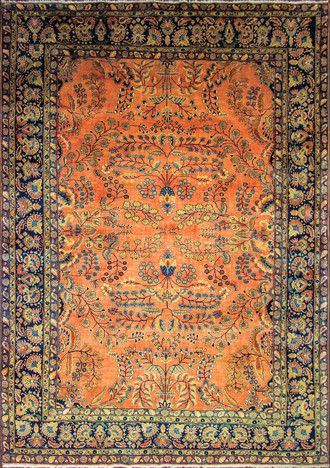
Antique Persian Mohajeran Sarouk, c-1910, the rug has very high density of knotting and it is made of fine manchester wool.
The floral design of the rug has a pleasant appeal because the field is field is very open.
The combination of colors are very appealing.
Sarouk, a small village and its neighboring villages in northwestern Iran are the source of large numbers rugs imported into the United States. The Sarouk carpet production came into existence around 1880 specifically for the European and North American markets.
This elegant antique Persian Laver Kerman carpet is an outstanding example of the refined weaving tradition that made the Laver (Ravar) workshops of Kerman world-famous during the late 19th and early 20th centuries. Laver Kermans are regarded as the finest carpets produced in the Kerman region, distinguished by their exceptionally fine weave, velvety wool, graceful drawing, and sophisticated floral artistry.
The carpet displays a magnificent all-over floral composition centered around an elaborate ivory medallion that blends harmoniously into a densely ornamented midnight-blue field.