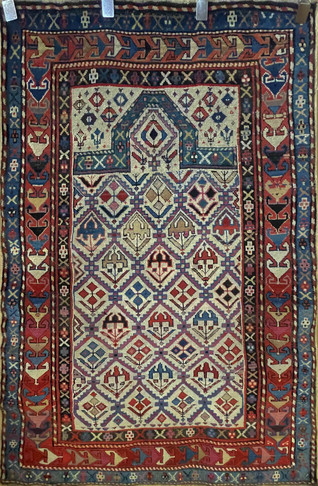
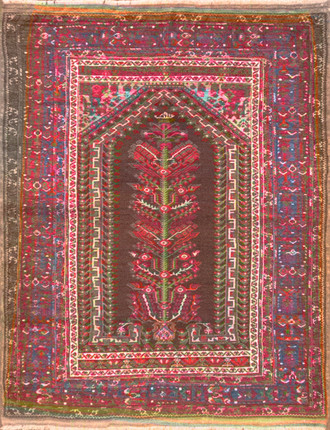
This is an exceptionally fine and highly decorative antique Shirvan Caucasian prayer rug, most likely Kuba/Konagkend influenced or related Northeast Caucasian village weaving from the late 19th century, circa 1880–1900. The rug displays an unusual and sophisticated lattice design filled with stylized hooked and geometric floral motifs, enclosed within an elegant stepped prayer niche. The drawing is remarkably refined for a small-format Caucasian rug, with extraordinary precision and balance throughout the composition.
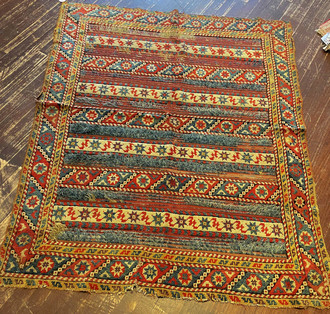
A distinctive antique tribal weaving composed of horizontal bands, alternating between woven pile sections and flatwoven kilim stripes. The pile bands contain bold geometric rosettes, diamond medallions, and small tribal devices, while the kilim bands add texture, movement, and a utilitarian village character.
The colors include brick red, indigo blue, ivory, soft gold, and muted green, giving the piece a strong rustic and authentic appearance. The combination of techniques suggests a practical village weaving tradition,
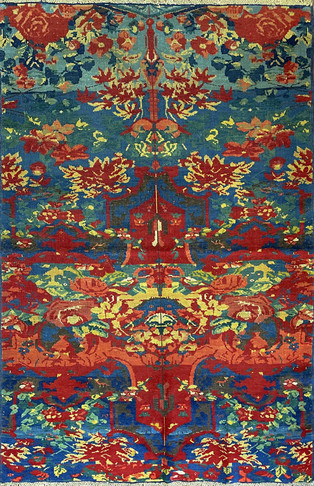
A striking and highly decorative antique Karabagh rug, distinguished by its bold, expressive drawing and rich, painterly color palette.
The composition features a loosely organized, almost all-over floral and abstract design, with large-scale blossoms, stylized foliage, and animal-like forms arranged in a dynamic, symmetrical layout.
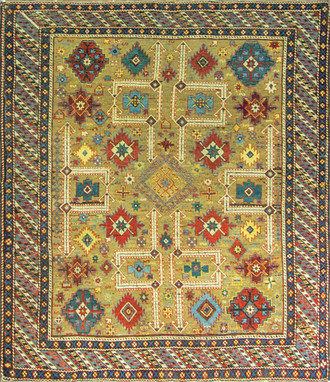
A finely drawn and well-balanced antique Shirvan rug, likely of Baku influence, distinguished by its elegant square format and refined geometric composition.
The field is set on a soft camel / sand-colored ground, decorated with a structured arrangement of stylized rosettes, cruciform motifs, and angular medallions, connected by delicate linear devices.
An exceptional Karabagh prayer rug featuring a refined mihrab with a tree-of-life design. The composition is elegant and well-balanced, combining geometric structure with soft, floral expression.
The standout feature is its rare chocolate-brown field, enriched by a sophisticated palette of madder red, rose, green, pale blue, and ivory. The colors are both vibrant and harmonious, giving the piece unusual depth and warmth. Finely drawn borders complete the composition with precision.
Origin: Southern Dagestan (Lesghi / Lezghi group)
Date: Circa late 19th century
Structure: Hand-knotted wool on wool.
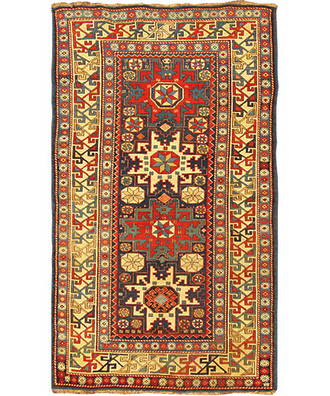
A finely woven antique Lesghi rug, distinguished by its crisp drawing and classic all-over geometric lattice. The field features a vertical arrangement of octagonal rosettes and star-like medallions, closely associated with Lesghi designs, rendered with precision and clarity.
The palette is well-balanced, combining ivory, deep indigo, and madder red, with subtle secondary tones that enhance contrast and definition.
Antique Persian Bakhtiari Rug
Size: 4'7" x 5'7"
Origin: Western Persia (Bakhtiari region)
Date: Early 20th Century (circa 1900–1920)
Construction: Hand-knotted wool pile on cotton foundation
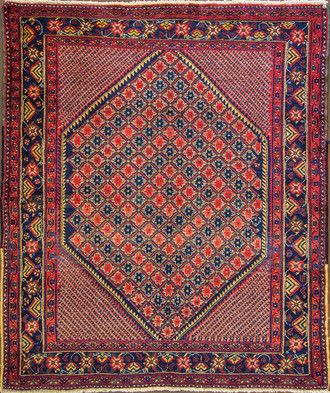
This finely woven antique Persian Bakhtiari rug represents a classic and highly decorative example of tribal village weaving from western Iran.
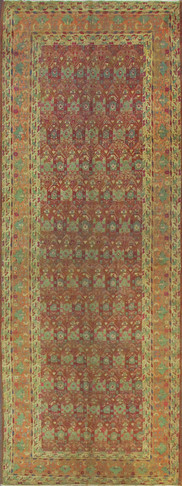
A gorgeous Agra gallery rug.
Agra is a large city and weaving district in North Central India that has been prolific in producing tightly knotted, decorative, floral rugs. Antique Agra rugs are renowned for their beauty of color, elegance of drawing and perhaps above all fineness of knotting. Agra colors are mostly red yellow green and ivory. The design is famous for its floral tendrils, angular vines and stars. Probably the most sophisticated carpet look with softness of visual impact to harmonize the atmosphere.