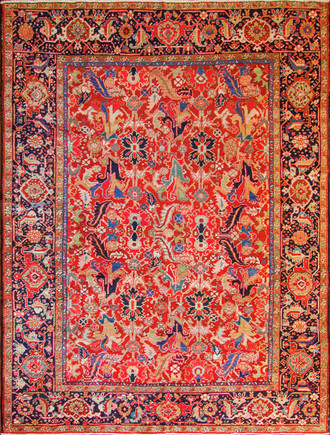
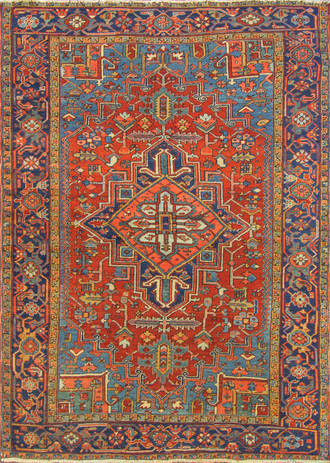
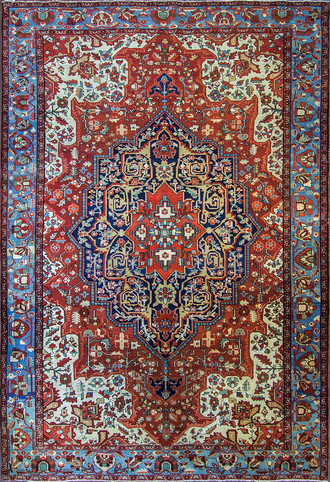
Gorgeous antique Persian Serapi Heriz carpet with all-over design and breathtaking red brick background color. Heriz rugs are Persian rugs from the area of Heris, East Azerbaijan in northwest Iran, northeast of Tabriz. Such rugs are produced in the village of the same name in the slopes of Mount Sabalan. Heriz carpets are durable and hard-wearing and they can last for generations. 19th century examples of such carpets are often found on sale by major auction houses in United States and Europe.
The city of Tabriz is situated in North West Persia and it is one of the largest cities and also the capital in the province of Azerbaijan and was the earliest capital of the Safavid dynasty and it can claim to have been a center of carpet production longer than any other city in Iran. The population comprising of the Azaris, who are the largest ethnic minority in Iran and speak the Turkish dialect. The city is old and has for centuries been a very important trading place and border station. A good Tabriz has a short and rough pile.
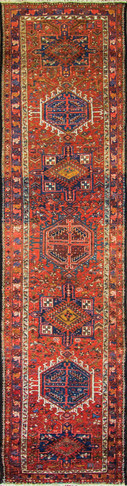
Karajah, Heriz, Serapi, Bakshaish. Karaja and Serapi or Bakshaish all are villages in the district of Heriz north west Persia. Since mid-19th century rugs from these area imported to US and European market. This Karaja rug like many other antique rugs antique rugs that used in US has beautiful appeal of colors, they are soft and mute and great attraction to the viewers
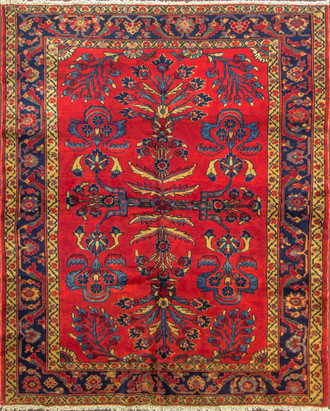
This handsome late 19th-century Persian Heriz/Serapi rug is a fine example of Northwest Persian craftsmanship, woven around 1890 with excellent wool and beautifully balanced proportions. Unlike the bold medallion designs commonly associated with Heriz rugs, this piece features an elegant allover geometric floral pattern, making it both distinctive and highly decorative.
The richly colored brick-red field is filled with repeating stylized palmettes, angular vines, and geometric floral motifs arranged in a harmonious lattice.
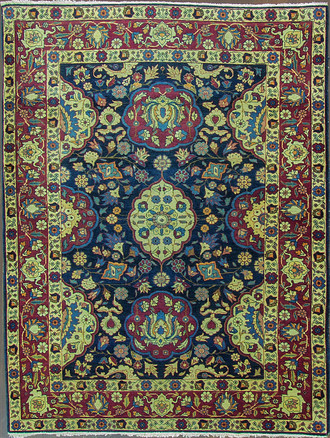
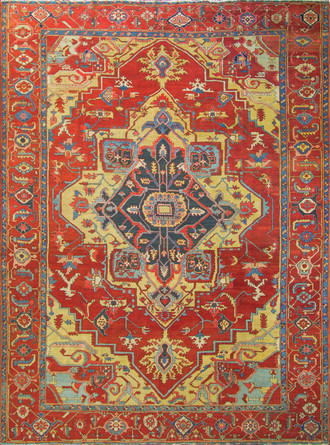
Antique Persian Heriz rug, Persia, circa 1920. This remarkable and artistic antique rug, showcases an ornate, multicolored central design. At the heart of the antique Persian Heriz Serapi rug, a many-petaled flower is surrounded by a 12-pointed stellar shape in light and dark blue. Angular stylized flowers stud the navy form and are echoed across the red medallion that encases it. Four ornaments decorate the corners of the medallion, and floral adornments nestle within each tip. A rust red field, brimming with botanical decorations, extends the medallion’s shape.
Produced south of the city of Arak by Armenians in Persia, Lilihan rugs are known for their design. Traditionally designed with a curvilinear lattice with traditional floral motifs these rugs also feature geometric designs. The primary characteristic of Lilihan rugs is the abundant use of pink although khaki and brown ornament the salamander background. Made with a long pile, these rugs are often mid-sized and favored by American tastes. The visually stunning Lilihan rug is a favorite due to its durability, longer pile, and vibrant colors.
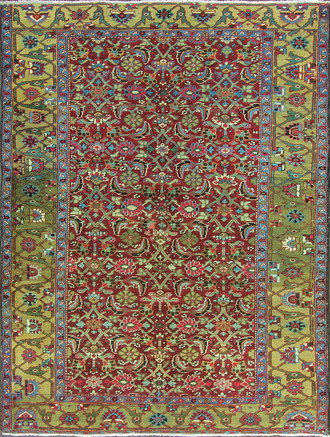
The most wonderful color combination which bring a dramatic look the whole carpet. The design and condition of the rug are impeccable.
This remarkable and artistic antique rug, showcases an ornate, multicolored central design. At the heart of the antique Persian Heriz Serapi rug, a many-petaled flower is surrounded by a twelve-pointed stellar shape in light and dark blue and yellow. Angular stylized flowers stud the navy form and are echoed across the red medallion that encases it. Four ornaments decorate the corners of the medallion, and floral adornments nestle within each tip.
The Feraghan district area have a long history of rug and carpet weaving in the 19th century, many British companies opened oriental carpet factories and began to produce fine Persian Feraghan rugs and carpets for export to Europe. Antique Feraghan carpets and rugs are prized for their sturdy construction and their fine quality.