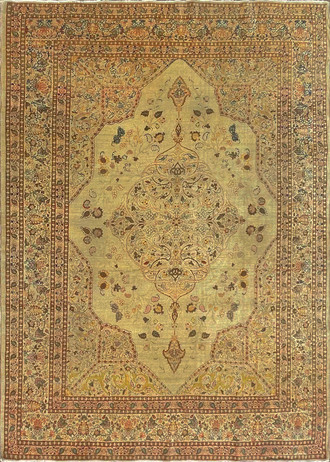
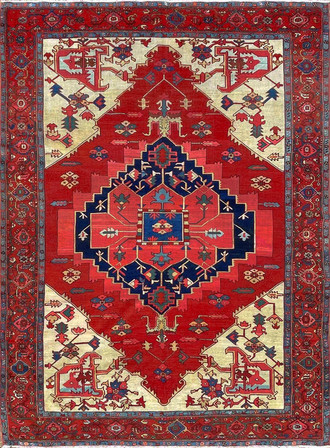
Indulge in the splendor of the 7'6" x 10' Antique Persian Tabriz Hajji Jalili Carpet, a veritable crown jewel in the world of Persian rugs, hailing from the distinguished era of the 1880s. This masterpiece boasts a very fine weave and is adorned with the luxurious touch of kork wool, presenting itself in excellent condition, a testament to its enduring beauty.
Its open field with the large central medallion, floral design unfolds gracefully against a canvas ranging from tan chickpea to light green, creating an enchanting visual symphony.
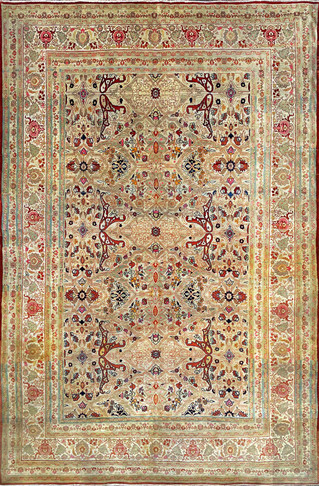
Indulge in the splendor of the 6'6" x 9'6" Antique Persian Tabriz Hajji Jalili Carpet, a veritable crown jewel in the world of Persian rugs, hailing from the distinguished era of the 1880s. This masterpiece boasts a very fine weave and is adorned with the luxurious touch of kork wool, presenting itself in excellent condition, a testament to its enduring beauty.
Its all-over floral design unfolds gracefully against a canvas ranging from tan chickpea to light green, creating an enchanting visual symphony.
Antique Persian Heriz/Serapi, hailing from the Iranian province of Eastern Azerbaijan and the encompassing Heriz region, hold a rich tapestry of history and craftsmanship. The village of Serab, nestled to the south of the Heriz region in North West Persia, is the venerable birthplace of these exquisite rugs.
Serapi, a term often reserved for the most exceptional antique rugs from the Heriz vicinity, has carved out a distinct niche in the world of rug connoisseurs.
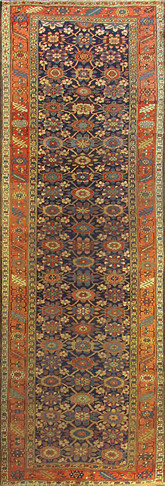
Antique Persian Tribal Bijar Halwai hand woven Gallery carpet 5' x 15'3", c-1890's, with distinct all over or repeated large flower design on blue background color, made of wool on wool foundation,
It's condition is very good with Wear consistent with age and use and it has been reduced in size.
A dynamic and exciting composition, this gorgeous late 19th century Bidjar runner from the 1880s showcases some of the finer qualities exhibited by the Persian iron rug of Iran. This antique Bijar is a historical rug woven in the village of Halwai, North-East of Bijar.
Persian Serapi rugs, hailing from the Iranian province of Eastern Azerbaijan and the encompassing Heriz region, hold a rich tapestry of history and craftsmanship. The village of Serab, nestled to the south of the Heriz region in North West Persia, is the venerable birthplace of these exquisite rugs.
Serapi, a term often reserved for the most exceptional antique rugs from the Heriz vicinity, has carved out a distinct niche in the world of rug connoisseurs.
Enhancing the description of the Antique Persian Senneh Kilim Rug:
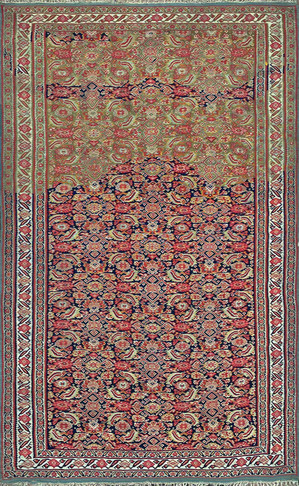
Adorning your space with an exquisite piece of textile art, we present an Antique Persian Senneh Kilim Rug from the early 20th century. This fine creation offers a visual tapestry of Persian heritage and craftsmanship.
Design & Colors: A mesmerizing allover design in the classic Persian style graces the rug's canvas. Delicately stylized paisleys, known as "boteh," float gracefully against a backdrop of rich, black and green hues.
Immerse yourself in the timeless allure of our Antique Persian Lilihan runner, a true gem 2'8" x 19' Crafted with precision and exquisite finesse, this rug hails from around 1920 and remains in excellent condition, a testament to its enduring quality.
A symphony of red and blue colors adorns the rug's canvas, creating a harmonious blend that captivates the senses.
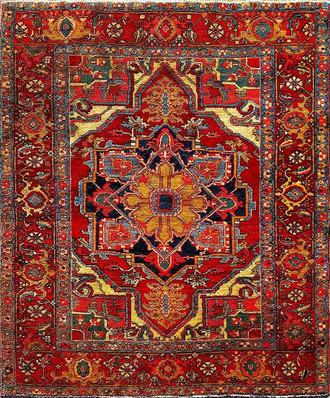
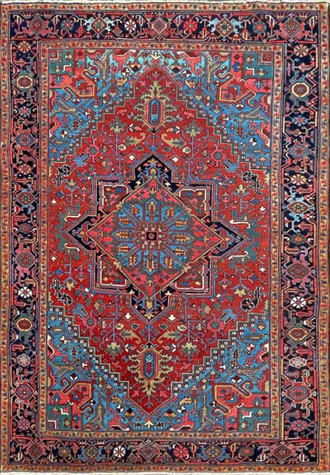
Introducing our stunning Antique Northwest Persian Heriz Carpet, a true masterpiece of craftsmanship and artistry. This exquisite rug, measuring 7' x 10'5" and dating back to the 1920s, is like a captivating painting for your floor, crafted from natural dyed wool.
A charming antique Heriz carpet, it boasts a vibrant array of outstanding colors that are nothing short of a visual delight.