This very fine antique Persian Sarouk Feraghan rug, measuring approximately 3'4" x 5'1" and dating to prior to 1880, is an exceptional and highly collectible example of 19th century Western Persian weaving.
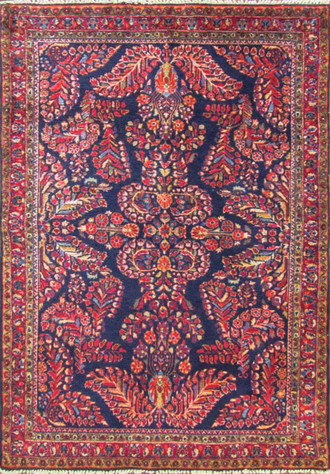
This exceptional antique Persian Mohajeran Sarouk rug, measuring approximately 3'5" x 4'11" and dating to around 1920, is a superb example of the highly refined Mohajeran weaving tradition from Western Persia. Rugs of this caliber are admired for their luxurious wool quality, elegant drawing, and richly saturated coloration, qualities that distinguish the finest Mohajeran Sarouks from ordinary Sarouk production.
The rug displays a dramatic and highly artistic allover floral design set upon a deep midnight navy field of remarkable richness and depth.
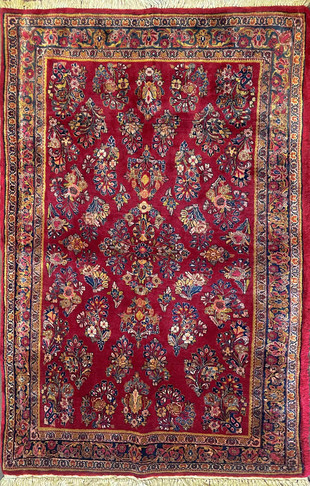
This exceptional antique Persian Mohajeran Sarouk rug, measuring approximately 3'3" x 5' and dating to around 1920, is a superb example of the highly sought-after Mohajeran workshop weaving tradition of Western Persia. Mohajeran Sarouks are widely considered among the finest and most elegant Sarouk carpets ever produced, celebrated for their luxurious wool quality, refined drawing, and extraordinary decorative richness.
The rug displays a beautifully balanced allover floral composition set upon a luminous ruby-crimson field of remarkable depth and saturation.
This exceptional antique Persian Feraghan Sarouk rug, measuring approximately 3'4" x 5'2" and dating to around 1890, is a beautiful and highly collectible example of late 19th century Western Persian weaving.
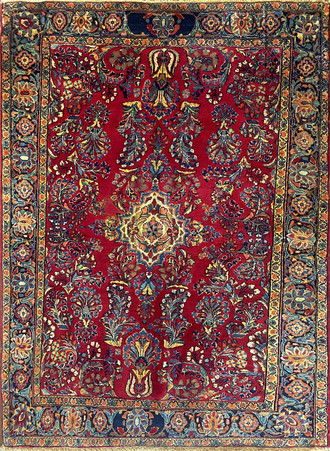
This elegant antique Persian Sarouk rug, measuring approximately 3'3" x 5'3" and dating to around 1930, is a beautiful example of the refined artistic weaving traditions that made Sarouk carpets among the most admired Persian rugs exported to the West during the early 20th century.
The rug displays a richly ornamented allover floral composition centered around a delicately drawn medallion set upon a luminous raspberry-red field.
This outstanding antique Persian Sarouk Feraghan rug, measuring approximately 3'4" x 5'2" and dating to around 1880, is a beautiful and highly collectible example of late 19th century Western Persian weaving.
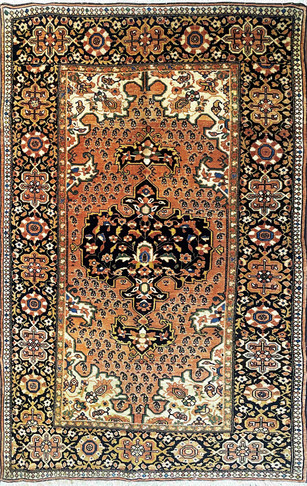
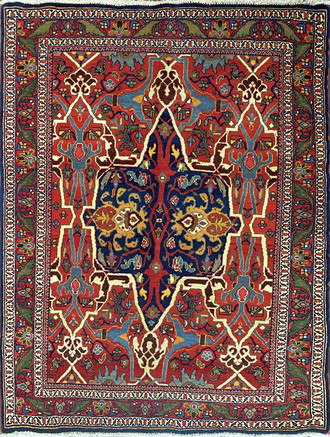
This beautiful antique Persian Bijar rug, measuring approximately 3'8" x 4'10" and dating to around 1920, is an excellent example of the highly respected weaving traditions of Bijar in Western Persia. Often referred to as the “Iron Rugs of Persia,” Bijars are celebrated for their extraordinarily durable construction, dense weave, and powerful geometric interpretation of classical Persian floral designs.
This particular example displays a striking and highly artistic drawing centered around a bold navy medallion set against a rich coral-red field.
Ornak is a rug sampler, for corner of the rug.
Antique Kurdish rugs and bags are renowned for their distinctive patterns, vibrant colors, and high-quality craftsmanship.