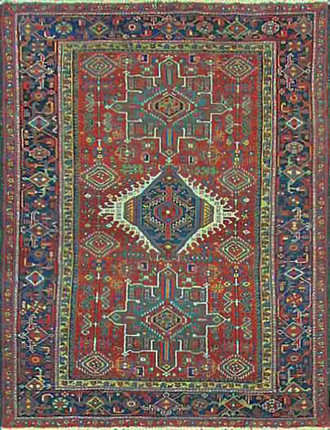
Material: Hand-spun wool on cotton foundation
Quality: Good village weave with excellent natural colors
This attractive early 20th-century Persian Karaja rug is a classic example of the weaving traditions of the Heriz district in Azerbaijan, Northwest Persia.
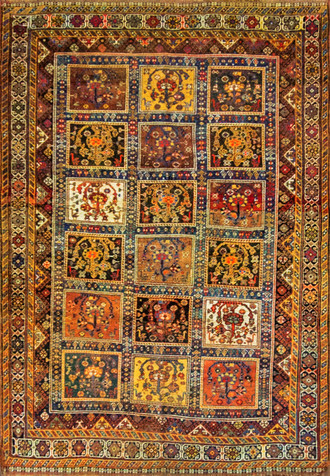
Material: Hand-spun wool on wool foundation
Quality: Fine tribal weave with excellent natural vegetable dyes.
This beautiful late 19th-century Persian Qashqai rug is a highly decorative and collectible example of the classic Garden (Khesti) design, one of the most admired patterns woven by the Qashqai tribes.
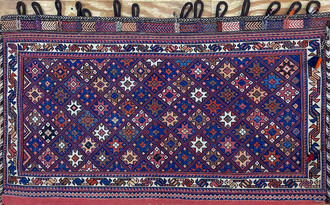
This outstanding antique tribal saddlebag is a beautifully woven example of early 20th-century nomadic craftsmanship, preserved in exceptional condition. The front panel displays an elegant lattice design composed of dozens of small diamond compartments, each enclosing stylized star and rosette motifs.
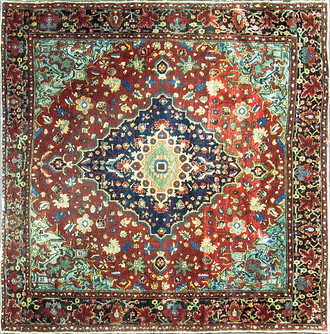
A beautiful antique Persian Feraghan Sarouk rug woven in an uncommon square format. The rug features a classic medallion design on a rich red field filled with finely rendered floral motifs and elegant vine scrolls. The contrasting pale blue spandrels and dark navy border frame the composition beautifully, creating a harmonious balance of color and design. Finely woven with high-quality wool and natural vegetable-dyed colors, this rug exhibits the graceful drawing and artistic sophistication for which Feraghan rugs are celebrated.
This charming late 19th-century Kurdish rug is an exceptionally attractive and collectible example distinguished by its rare camel-colored field and lively palette. Woven by Kurdish tribal , the rug displays a highly individualistic Tree-of-Life composition with stylized flowering plants, geometric shrubs, and suspended diamond motifs arranged within an architectural lattice design.
The warm camel-hair ground provides a beautiful natural backdrop for the vivid greens, deep indigo blues, rich madder reds, soft pinks, and ivory highlights.
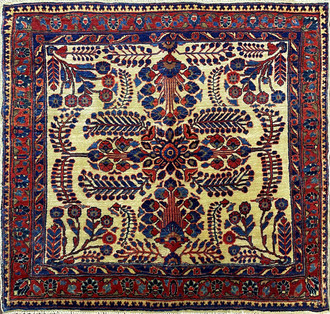
This beautiful antique Persian Mohajeran Sarouk is an especially desirable example due to its unusual nearly square format and elegant ivory field. Most Mohajeran Sarouks were woven in rectangular formats with darker grounds, making this light-colored square example considerably rarer and more decorative.
The design features a highly refined Tree-of-Life and floral vase composition arranged symmetrically across the ivory field.
This attractive antique Persian Heriz rug displays the bold geometric character that has made Heriz weavings among the most sought-after village rugs from Northwest Persia. The design features a vibrant brick-red field centered by a series of angular diamond medallions rendered in ivory, sky blue, navy blue, and soft salmon tones.
The field is enriched with numerous stylized tribal motifs, rosettes, latch-hook ornaments, and geometric floral elements arranged in a balanced and energetic composition.
This attractive antique Persian Karaja rug is a fine example of the bold geometric village weaving traditions of the Karaja district in Azerbaijan Province, Northwest Persia.