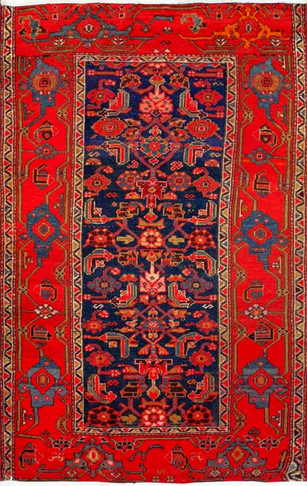
Immerse yourself in the captivating world of Malayer rugs, where Turkish tribal weavers intricately wove tales of artistry. Employing the symmetrical Gourde knot, a hallmark of their craft, these weavers created a distinctive contrast to the asymmetrical knots seen in many Persian pieces. The artistic finesse of Malayer rugs lies not only in their design but also in their technique.
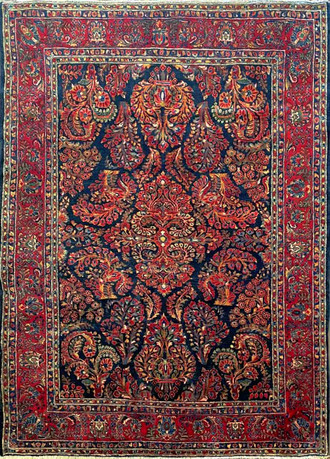
Antique handmade Northwest Persian Sarouk rug, c-1920, 2'6" x 4'10", fine wool, in red and blue color and traditional floral design and this rug has been woven in high quality, the condition is excellent and it has been cleaned professionally.
Antique carpets produced in Sarouk feature Classic curvilinear vine scrolls and opulent arabesques as well as local bouquet-filled designs that represent the diversity of regional carpet-weaving traditions.
The town of Sarouk located in northwest Persia.
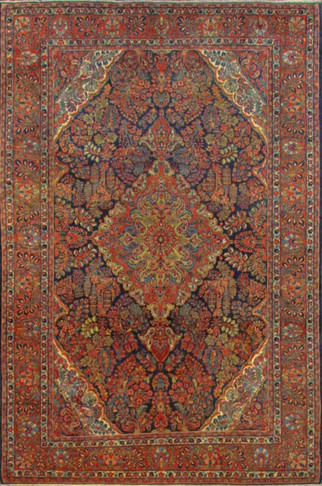
Antique handmade Persian Mohajeran Sarouk rug, 6' x 8'6", C-1910's, Very fine wool quality and fine weave, traditional red and blue background color and floral design, Mohajeran Sarouks are normally finer quality then regular Sarouk rugs and also the design less busy and more open.
Antique carpets produced in Sarouk feature classic curvilinear vine scrolls and opulent arabesques as well as local bouquet-filled designs that represent the diversity of regional carpet-weaving traditions.
The town of Sarouk located in northwest Persia.
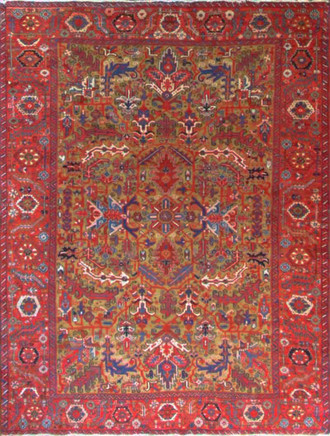
ANTIQUE handmade northwest PERSIAN HERIZ carpet. Circa date: 1920. With traditional geometric and medallion design. Made of natural dyed wool.
A charming multi color background antique Persian Heriz carpet it has a range of outstanding colors.
A great painting is measure by beauty of its colors and the same statement goes for this rug. Heriz rugs are Persian rugs from the area of Heriz, East Azerbaijan in northwest Iran, northeast of Tabriz. Such rugs are produced in the village of the same name in the slopes of Mount Sabalan.
Amazing antique Persian carpet with: rich colors, fine quality, Fables design, excellent condition, professionally cleaned great room size and made in early twenty century.
One of the top high end Persian carpet maker.
The source of this important provenance has been in the village of Sarouk. North of Arak (formerly Sultanabad). Sarouks are known to be of high quality. The pile is usually higher than the average Persian rug and therefore Sarouks are rather heavy and solid rugs, the wool being used is high quality durable wool.
Persian Heriz carpet, in excellent condition with nice high fine pile, vegetable dyed.
Great color combination, ( there are not to many Persian heriz that available in these colors).
The design is geometric and popular for today's room furnishing.
A charming antique Persian Heriz carpet it has a range of outstanding colors.
A great painting is measure by beauty of its colors and the same statement goes for this rug. Heriz rugs are Persian rugs from the area of Heriz, East Azerbaijan in northwest Iran, northeast of Tabriz.
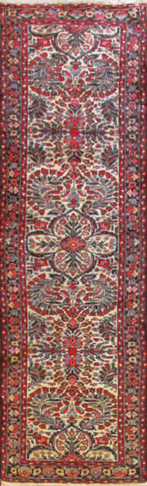
Antique handmade northwest Persian Lilihan/Sarouk runner. natural dyed wool, allover floral traditional design, c-1940's.
This rug is in excellent condition, the two ends and sides are secured and it has been professionally cleaned.
Beautiful ivory background color (mostly these type of runner are in red background color).
Produced south of the city of Arak by Armenians in Persia, Lilihan rugs are known for their design. Traditionally designed with a curvilinear lattice with traditional floral motifs these rugs also feature geometric designs.
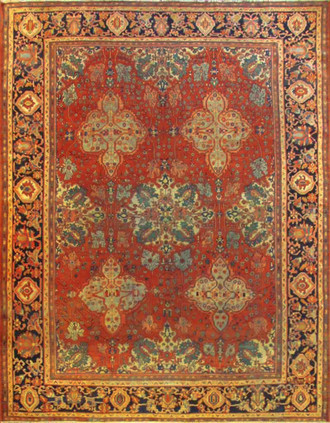
Antique handwoven northwest Persian Feraghan Sarouk Carpet, c-1870, soft wool, very decorative large flowers traditional or overall repeated medallions. fine woven.
Characterized by an impressive and vibrant composition, this antique Sarouk Farahan carpet from Persia showcases some of the finer points of classical Persian rug weaving. A dazzling pallet enhances an alluring design.
Good condition with Wear consistent with age and use, the ends and sides are secured and it has been professionally cleaned.