Unusual color and pleasing in demand for today market.
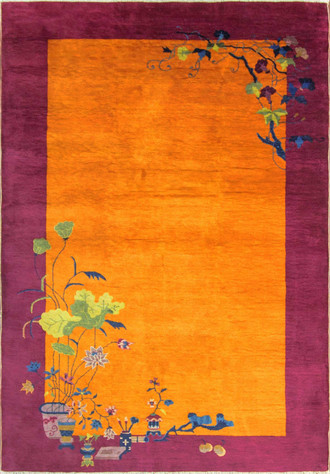
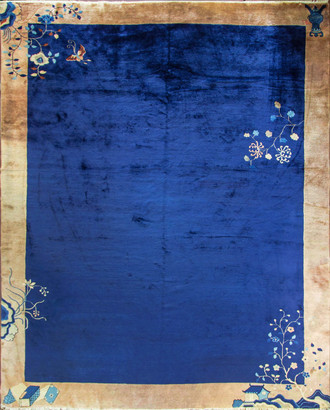
This wonderful Art Deco carpet was made in China, circa 1910s or 1920's. It has purchased from a nice home in New York. Walter Nichols was great American rug producer (the Art Deco rugs which he did not originate them) in Tientsin. The rugs made of wool and silk with bold vibrant colors and the pattern are pictorial scenes and trees, birds, clouds, mountains, dragons, butterfly and flowers. The production of Art Deco rugs started from 1910s-1950s and mostly with western influence.
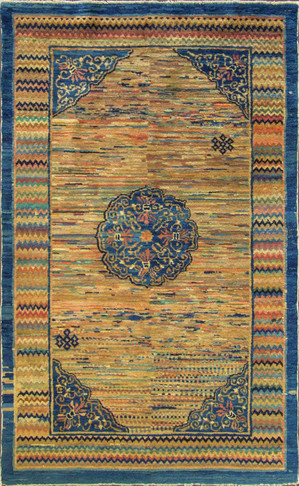
Antique Chinese rug, origin: China, circa early 20th century. This is a truly wonderful antique oriental rug a Chinese piece made some time during early 20th century. This rug represents something genuinely special and is a testament to the artisans who produced it. This rug possesses many of the qualities most sought after by collectors and experts and would bring beauty and sophistication to any home.
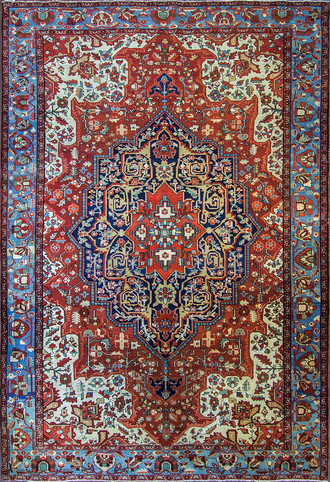
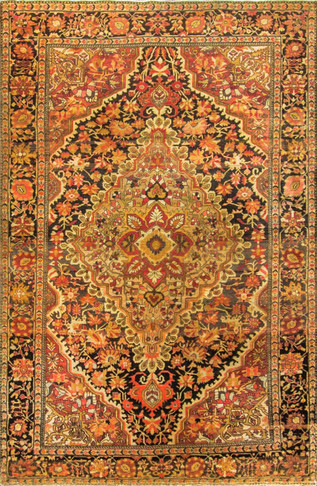
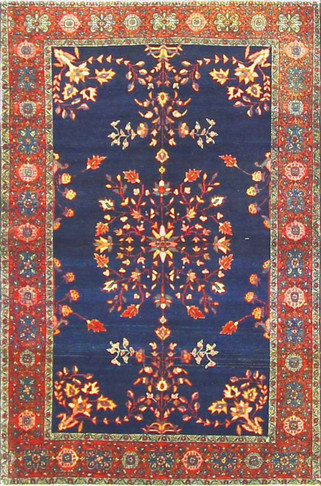
The Feraghan district area have a long history of rug and carpet weaving in the 19th century, many British companies opened oriental carpet factories and began to produce fine Persian Feraghan rugs and carpets for export to Europe. Antique Feraghan carpets and rugs are prized for their sturdy construction and their fine quality.
One of the most beautiful Art Deco carpet.
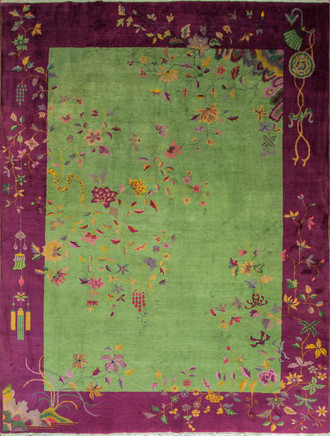
This rug is describing itself as the most beautiful combination of colors such as light green, yellow plum and other.
With a very pleasant design and its condition is absolutely is perfect.
This wonderful Art Deco carpet was made in China, circa 1920s. Walter Nichols was great American rug producer (the Art Deco rugs which he did not originate them) in Tientsin. The rugs made of wool and silk with bold vibrant colors and the pattern are pictorial scenes and trees, birds, clouds, mountains, dragons, butterfly and flowers.
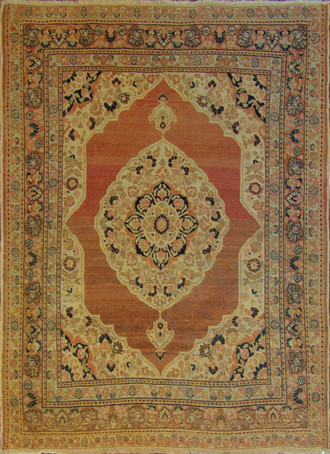
Tabriz carpets are distinguished by their excellent weave and by their remarkable adherence to the classical traditions Tabriz carpets are distinguished by their excellent weave and by their remarkable adherence to the classical traditions of Persian rug design. The city of Tabriz, was the earliest capital of the Safavid dynasty. One of the most important figures in Tabriz rug making was the master weaver Haji Jalili and best known today for his incredible and unique approach to rug-making and his preference for distinctive color palettes and design elements.
The Feraghan district area have a long history of rug and carpet weaving in the 19th century, many British companies opened oriental carpet factories and began to produce fine Persian Feraghan rugs and carpets for export to Europe. Antique Feraghan carpets and rugs are prized for their sturdy construction and their fine quality.
The Feraghan district area have a long history of rug and carpet weaving in the 19th century, many British companies opened oriental carpet factories and began to produce fine Persian Feraghan rugs and carpets for export to Europe. Antique Feraghan carpets and rugs are prized for their sturdy construction and their fine quality
A perfect condition art deco Chinese Peking quality with Manchester wool and open blue field.
Antique Peking rugs started in China shortly after the end of the First World War. During this period, Chinese rug weaving factories relocated from Ningxia, as well as other carpet weaving centers, to the Chinese capital.
Peking rugs could adhere to the traditional patterns derived from Ningxia production.