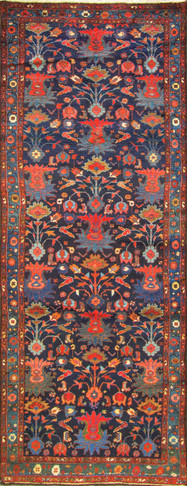
The Bakhtiari tribe, based in Chahar Mahaal and Bakhtiari, is well known for their rugs and weavings. They have been weaving rugs exported around the globe since the early 19th century
Sarouks also called Sarouks are double-wefted, heavier carpets with a higher knot count than rug from the village of Sultanabad. Fields are often blue or ivory and designs typically feature either large medallions or representations of trees and birds
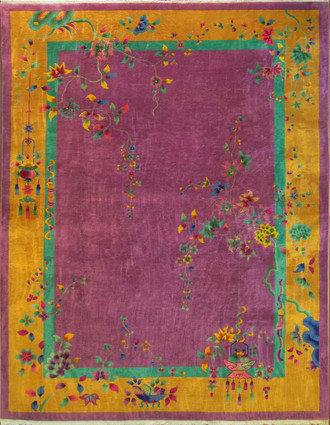
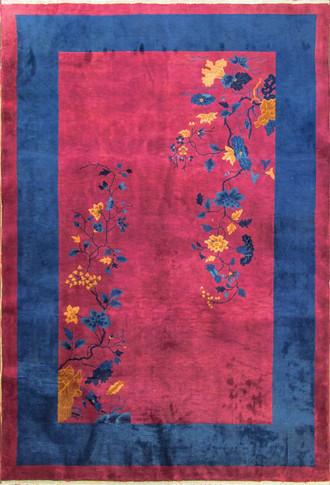
This wonderful Art Deco carpet was made in China, circa 1920s. Walter Nichols was great American rug producer (the Art Deco rugs which he did not originate them) in Tientsin. The rugs made of wool and silk with bold vibrant colors and the pattern are pictorial scenes and trees, birds, clouds, mountains, dragons, butterfly and flowers. The production of Art Deco rugs started from 1910s-1950s and mostly with western influence.
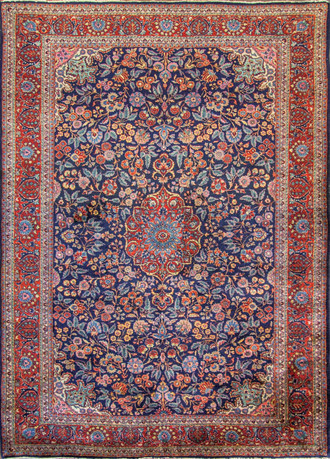
Great condition and quality Persian Kashan carpet, c-1930.
Amazing size and beautiful blue background with all over floral design in multi colors.
A Kashan rug made in Persia in the city of Kashan in Isfahan Province North Central Iran. There was production of Persian carpet at Royal workshops in the 17th and early 18th century. The Persian carpet workshops ceased production in about 1722 after the Afghan invasion. Persian carpet production was very minor until the 20th century. Historically, Kashan was a major centre in the garment trade.
This wonderful Art Deco carpet was made in China, circa 1910s or 1920's. It has purchased from a nice home in New York. Walter Nichols was great American rug producer (the Art Deco rugs which he did not originate them) in Tientsin. The rugs made of wool and silk with bold vibrant colors and the pattern are pictorial scenes and trees, birds, clouds, mountains, dragons, butterfly and flowers. The production of Art Deco rugs started from 1910s-1950s and mostly with western influence.
The most beautiful colors in top condition and stunning design.
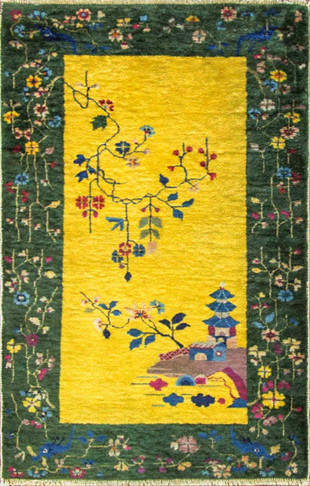
This wonderful Art Deco carpet was made in China, circa 1910s or 1920s. It has purchased from a nice home in Pennsylvania . Walter Nichols was great American rug producer (the Art Deco rugs which he did not originate them) in Tientsin. The rugs made of wool and silk with bold vibrant colors and the pattern are pictorial scenes and trees, birds, clouds, mountains, dragons, butterfly and flowers. The production of Art Deco rugs started from 1910s-1950s and mostly with western influence.
This wonderful Art Deco carpet was made in China, circa 1920s. Manchaster wool
Walter Nichols was great American rug producer (the Art Deco rugs which he did not originate them) in Tientsin. The rugs made of wool and silk with bold vibrant colors and the pattern are pictorial scenes and trees, birds, clouds, mountains, dragons, butterfly and flowers. The production of Art Deco rugs started from 1910s-1950s and mostly with western influence.
This Rug is Fair excellent condition with wear throughout the rug, cleaned and no stained, the ends and bindings of the rug are intact as original and there has not been any repairs. There are no tears, breaks or holes.
Stunning antique Hereke Carpet (Anatolian).
A court manufacturer was set up in the Izmit, Kerman weavers where imported to train the local weavers, therefore Kerman designs predominated.
The wool is very fine and it's very silky.